When a storm knocks out water and sewer service across Killeen, Killeen Porta Pros can get standard units on site within hours, not days. We stage stock locally and prioritize disaster response over routine swaps, because 50 units to a shelter matter more that week than a monthly contract does. Call first; we sort logistics after.
Speed depends on road access and how many units you need, but a handful of standard porta potty rental units can usually move same day once Killeen roads are passable. We do not wait on a full assessment before rolling trucks. If a shelter, church, or command post needs sanitation now, we treat it like an emergency porta potty rental call and dispatch from whatever inventory is closest, whether that means pulling from Killeen stock or shifting units from Harker Heights, 6.2 miles east, or Fort Hood, 7.0 miles northwest. A roll-off delivery truck needs about 60 feet of straight clearance behind it, so downed trees and debris piles change routing fast, and our drivers reroute around blocked streets rather than waiting for full cleanup. For flooding events we also stage portable restroom rental units on higher ground first, then move them once water recedes. If you are coordinating for a shelter or a multi-family evacuation site, use request a quote and tell us headcount and duration, even a rough one, so we send the right mix instead of guessing.
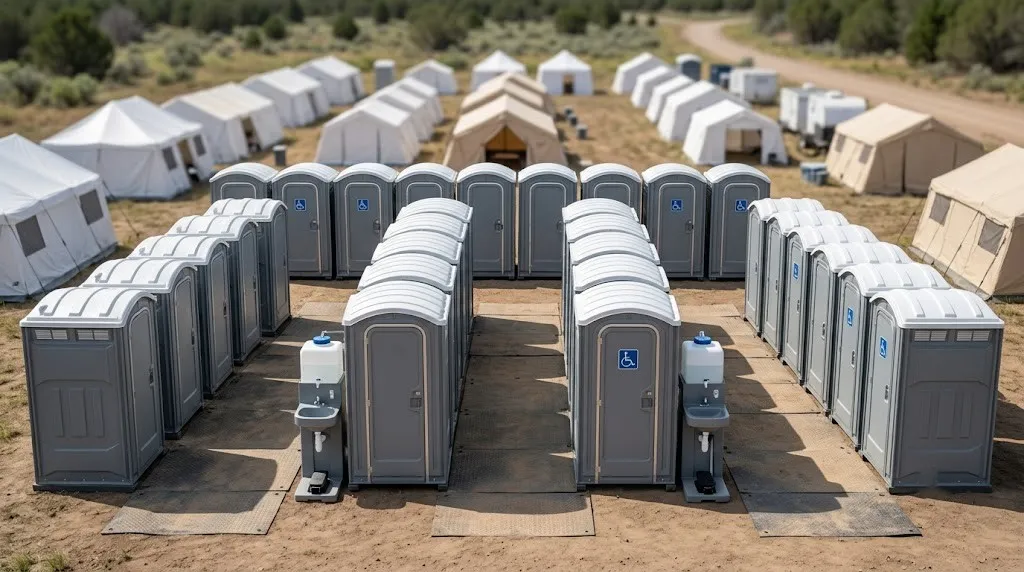
Standard units carry a 60 to 70 gallon holding tank and stand about 92 inches tall, which is enough for a shelter population running through the day and into the night without an extra service call. For sites without any water source, we pair units with handwashing station rental equipment, since OSHA 1926.51(a)(1) requires an adequate supply of potable water at any workplace, and shelter staff and volunteers count. Under 29 CFR 1910.141(d)(2), handwashing stations need soap and towels or a hand-drying device; hand sanitizer alone does not satisfy it, so we stock stations accordingly rather than dropping a sanitizer stand and calling it done. Where displaced households have mobility limits, we bring ADA accessible porta potty units; ADA Standards section 213.2 calls for at least 5 percent of clustered units to be accessible, never fewer than one, and section 304.3.1 requires a 60 inch turning circle inside. For longer-duration shelter operations we sometimes recommend a restroom trailer rental instead of stand-alone units, since trailers hold up better under continuous heavy use. If flooding hit septic systems, we also run septic pumping service and emergency septic service calls, because a compromised tank backing up into a shelter kitchen is its own hazard on top of the storm.
Placement follows the same access and stability rules as any job, storm or not: ADA Standards section 302.1 requires stable, firm, slip-resistant ground, and section 403.5.1 requires a 36 inch clear route to the door, which matters more than usual when the ground is soft or muddy after flooding. Our porta potty placement guide covers the general rules, but disaster sites add wrinkles: debris fields, downed power lines, and vehicles that cannot maneuver the way they would on a clear lot. We check for OSHA 1926.202-compliant barricades near any hazard before we set units, and we clear the pad of loose debris first per OSHA 1926.25 housekeeping practice, since a unit dropped on broken glass or scrap lumber is a problem within a day. For encampment-style relief sites, we sometimes bring temporary fence rental or crowd control barrier rental to keep foot traffic organized around the restroom bank, which speeds service access too. If the response runs past the first week and turns into a longer recovery effort, we shift customers toward monthly porta potty rental pricing and staging, since the day-rate model built for a 24 hour emergency call stops making sense once Killeen crews are settled into weeks of cleanup. Storage needs come up too; a storage container rental or mobile office trailer rental gives relief coordinators a dry base for supplies and paperwork.
It depends on population and hours of operation, not just headcount. OSHA 1926.51(c) sets ratios by worker count for construction crews, but a shelter runs closer to continuous public use, so we plan more conservatively. See how many porta potties do I need or call with your expected count.
Sometimes, yes. Standard day rates run 100 to 350 dollars depending on unit and quantity, but rush delivery outside normal routing can carry its own delivery charge. Ask upfront on request a quote so there is no surprise on the invoice.
Yes. We already cover Harker Heights, Fort Hood, Nolanville, Copperas Cove, and Belton as part of normal operations, so a regional event does not require setting up new routes. Check service areas for the full list.
Flooded septic systems need pumping before they back up further; a typical residential tank is pumped every 3 to 5 years under normal use, but storm intrusion changes that schedule. Call septic tank cleaning or the emergency line directly.
Yes, often more. High-use shelter sites need more frequent pumping than the standard weekly baseline. See how often are porta potties cleaned for the normal schedule we adjust from.
Yes. Killeen Porta Pros delivers disaster relief sanitation across Killeen and the surrounding metro, with same-day and next-day drop-off available on most orders.
Pricing depends on the unit and how long you need it. See our cost breakdown and request a free quote for an exact figure.
Standard rentals include scheduled service — a pump-out, a clean, a restock and fresh deodorizer. Busy or hot-weather sites can be serviced more often.
Call now or request a free quote — clean units, on-time delivery, transparent pricing.